
Chart McLean County's Former Owners Backward
The first row is always the newest deed. Each following row takes the prior grantor back to the instrument in which that person or entity was the grantee. Record the same fields for every transfer, without exception. The sample structure below shows what to capture; it invents no chain for a real parcel.
| Transfer date | Grantor to grantee | Deed type | Book/page or instrument |
|---|---|---|---|
| Newest matched filing | Prior owner to current grantee | As indexed | Copy exactly |
| Earlier matched filing | Earlier grantor to prior owner | As indexed | Copy exactly |
| Repeat to target era | One linked transfer per row | Note warranty, quitclaim, executor, or other form | Use to retrieve the instrument |
A chain holds only when each deed describes the same land. A familiar name or a close date, without a property match, proves nothing.
Reconstruct McLean County's Deed Chain in Reverse
The McLean County Clerk serves as the county recorder. Its index supplies the parties, instrument type, recording date, book/page or instrument number, and description clues a backward chain depends on.
- Identify the current purchase deed with the present owner as grantee.
- Read the grantor and source-of-title reference from that instrument.
- Search the grantor as an earlier grantee and match the same legal description.
- Repeat until the online image cutoff, then continue at the courthouse or in microfilm.
Grantor conveys the interest. Grantee receives it. A chain of title links those instruments in sequence, while a reverse index supports a backward party search. A warranty deed and a quitclaim deed carry different promises, but either can serve as a chain link.
McLean County's Online Images Start in 2004
Remote images of most instruments begin in January 2004 through eCCLIX. The service sits behind an account login. It also requires special image software. That cutoff is not the start of ownership records. Most courthouse indexes extend from the county's 1854 formation to the present, with stated exceptions. The eCCLIX login page displays the remote doorway rather than a deed result, so view the clerk's remote land-record entry point to see which era must move offline.
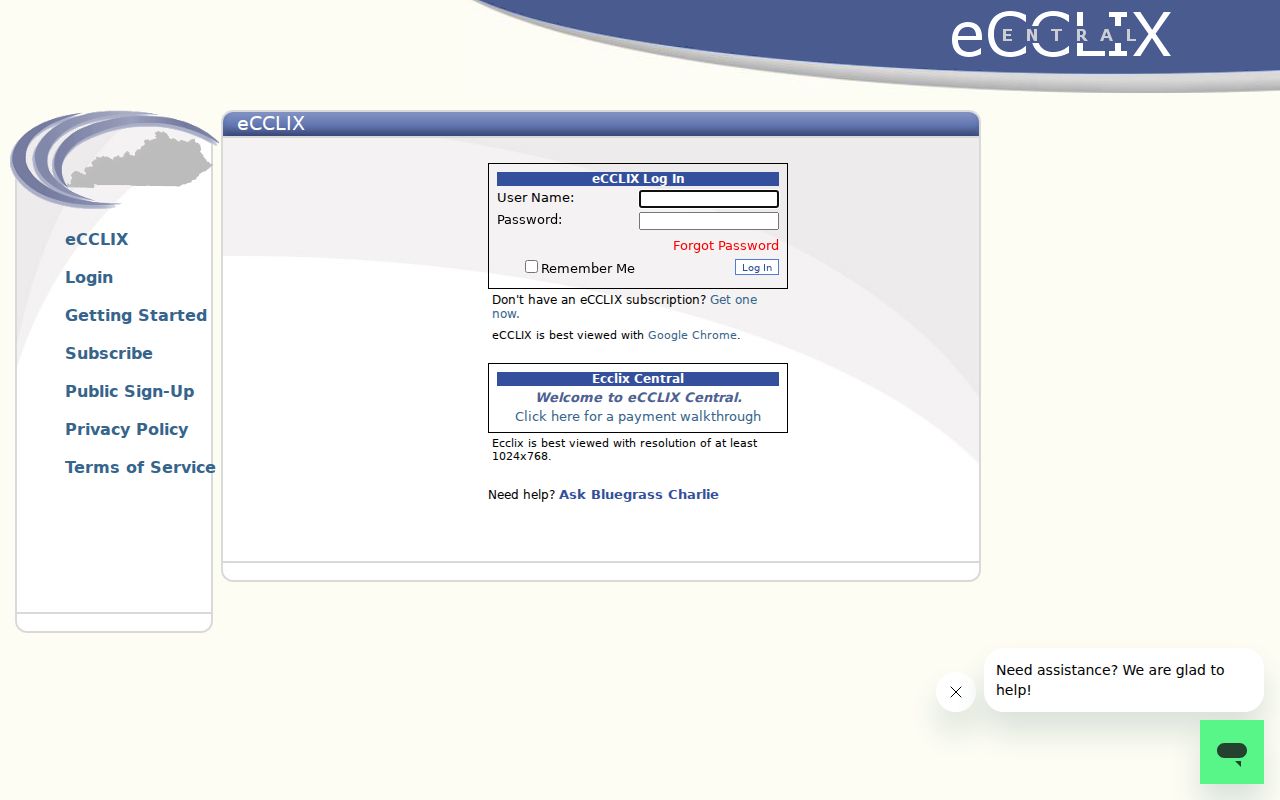
The image makes one distinction clear. Remote access runs through an account, while the older ownership chain remains reachable through office and archival channels.
Continue McLean County Former Owners in Books and Film
Office viewing of indexes and images is free. Deed books and indexes are pulled by request. Ask with names, approximate dates, legal-description clues, or a known book/page reference. Kentucky's retention schedule lists McLean deed microfilm covering 1854 through 2008, and the Kentucky microfilm guide supports title, county, date, and reel searches.
Another route runs through KDLA records requests for archival copies, with staff research fees and mail delivery described by the agency. Old tax books can bridge a gap. Wills help too. A transfer that passed through an estate often reads differently from an ordinary sale.
Depth warning. Most online images begin in January 2004; older former owners require courthouse indexes, deed books, microfilm, tax books, wills, or archives.
Follow McLean County Estate Transfers Sideways
A tidy buyer-to-seller pattern can break at death. Search name variants for executor, administrator, trustee, heirs, and the estate itself. Then check wills, probate orders, or an executor's deed. The circuit clerk can help identify the case record. The county clerk holds the recorded instruments that move or clarify the land interest.
Old tax books can narrow the year the assessed name changed. That entry is no conveyance. It points toward the deed, will, or order that completed the transfer. Treat the tax clue as a pointer, not proof.
Note: A will can state an intended transfer, yet a later deed or court order may be the instrument that completes the public chain.
Search Calhoon and Other McLean County Place Names
Old descriptions rarely match today's postal spellings. County history records Rhoadsville, Fort Vienna, Calhoon, and Calhoun, with the spelling shifting after 1900. Rural deeds often name a community. Rumsey, Beulah, Cleopatra, Buck Creek, and Stringer all appear. Run each verified variant through indexes, directories, newspapers, and genealogy sources. Then let the legal description settle which hit is the right one, especially when a former owner hides under the modern city name.
What McLean County's 1908 Fire Does Not Prove
McLean County's second courthouse, built in 1872, burned on January 8, 1908. The fire tempts people to assume a records gap. Resist that leap. Official accounts identify no deed-book series as destroyed or rebuilt. The fire proves no ownership gap. The index reaches from 1854 to the present. The deed microfilm runs from 1854 to 2008. Both argue for asking what survives before assuming loss.
Court Order Book A, page 33, adds an early clue. On July 3, 1854, lots 72 and 79 were designated as the seat of justice. Check it against early plats and deeds.
Note: Treat courthouse history as a question. Do not treat it as automatic proof that a missing online image means a missing record.
Use McLean County Former Owners for Property History
A backward chain supports house history, estate research, boundary review, and purchase diligence. It does not establish title by itself. Title is a legal conclusion. Index errors, unrecorded interests, probate events, name changes, and similarly described tracts can all call for professional review.
Handle records about living former owners with restraint. Never use addresses, names, or family clues to track, harass, intimidate, or harm anyone. For the mechanics of pulling a single instrument, see the McLean County deed records page.
Keep a McLean County Former-Owner Chain Log
A chain log turns scattered deed records into a traceable line of ownership. For each step, write down the name you searched. Say whether that person was the grantor or the grantee. Note the instrument type, the execution date, and the recording date. Add the book and page where the deed sits. Then record the legal-description phrase and the next name the document points to. Flag an uncertain link instead of hiding it. That lets you resume at the courthouse, check microfilm, and defend why one owner follows another in McLean County property records.